










Last year, homework wasn’t like this. Maybe there were a few rough nights, but overall, your child kept up. Now it’s a nightly negotiation — missing assignments you find out about a week too late, a backpack that looks like a paper shredder exploded in it, and a kid who insists “I don’t have any homework” three nights in a row before a progress report says otherwise.
If this sounds familiar, you’re not imagining things, and it’s not a discipline problem. If you’ve found yourself searching late at night why your middle schooler is suddenly struggling with homework and forgetting assignments, you’re far from the only parent asking. Something real changes in middle school, and it changes fast. Understanding what’s actually different — instead of assuming your child suddenly stopped caring — is the first step toward fixing it.
Middle School Asks for a Skill Nobody Taught
Elementary school runs on structure that’s built in for kids. One teacher who knows every student well. One classroom. A folder system the teacher checks. Assignments written on the board and often repeated out loud. A pace that rarely changes week to week.
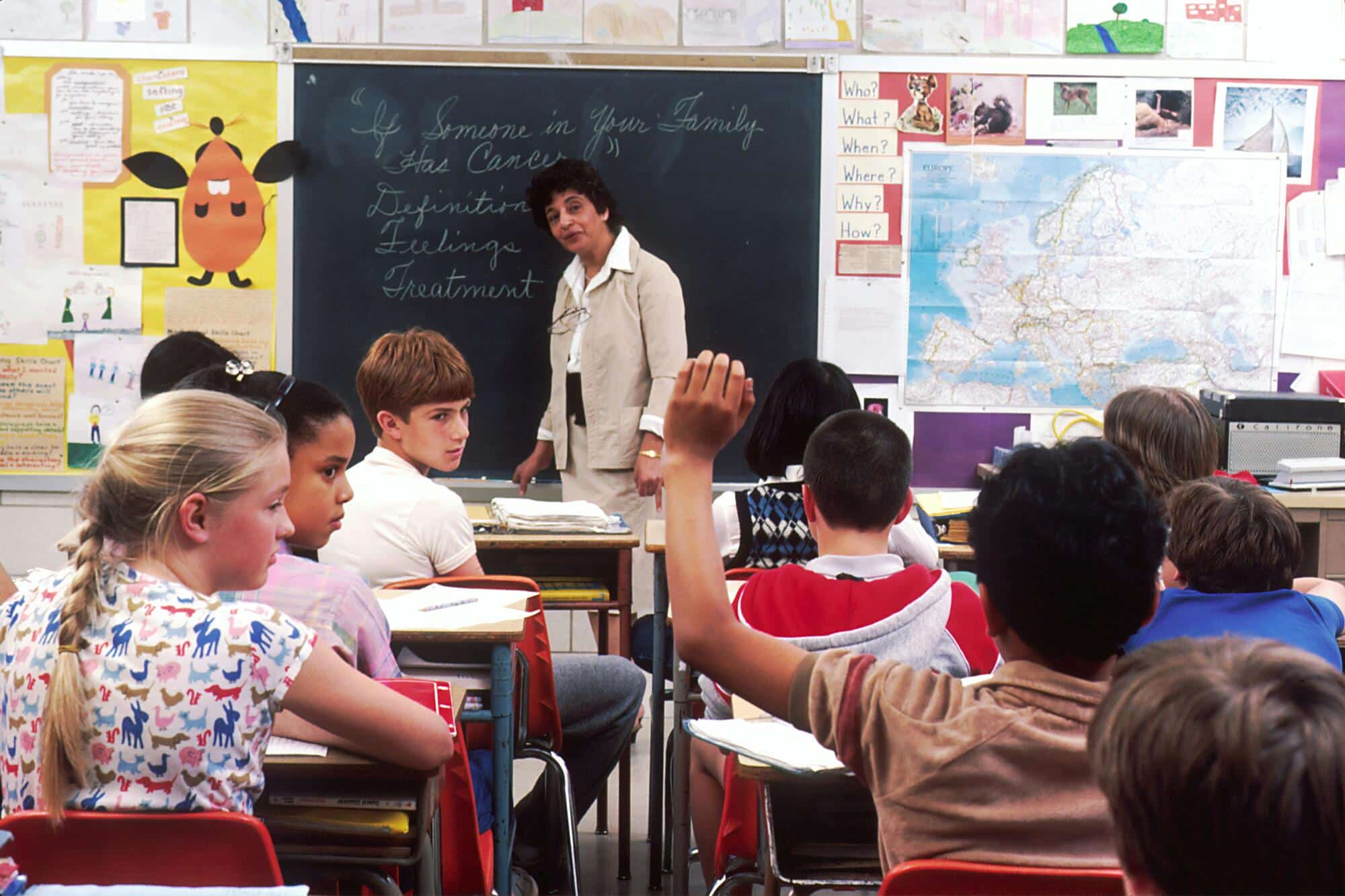
Middle school removes almost all of that scaffolding in a single September. Suddenly there are five or six teachers, each with their own way of assigning work — one uses an app, one writes it on a whiteboard, one expects students to remember verbally. There’s no single adult tracking whether your child is falling behind, because no single adult sees the whole picture anymore. And the courses themselves ask for something new: not just doing the work, but planning when to do it, breaking multi-step projects into pieces, and remembering commitments without someone standing over them.
That set of abilities — planning ahead, holding multiple tasks in mind, starting something without being told, switching between subjects and expectations all day — is called executive function. It’s not the same thing as intelligence, and it’s not the same thing as motivation. It’s a set of skills, and like any skill, some kids develop it earlier and some need more time and explicit practice. Middle school just happens to be the moment when the gap between what’s expected and what’s been taught becomes impossible to ignore.
What This Actually Looks Like at Home
If your middle schooler is dealing with an executive function gap rather than a motivation problem, it tends to show up in a specific, recognizable pattern, not just general laziness:
- Assignments genuinely forgotten, not avoided. Your child isn’t lying when they say they didn’t know about the essay due Friday — this is a well-documented pattern in kids with executive functioning challenges, not a character flaw. They truly didn’t register it, or wrote it down somewhere they never looked at again.
- Trouble starting, even on things they can do. Once they sit down and actually begin, the work often isn’t that hard for them. Getting to the starting line is the struggle, not the material itself.
- Big projects handled as one giant task instead of steps. A research project assigned three weeks out gets opened for the first time the night before, not because your child doesn’t care about the grade, but because breaking “write a report” into “pick a topic, find three sources, outline, draft intro” isn’t automatic yet.
- A backpack or binder that seems impossible to organize, no matter how many folders and labels you buy — the system falls apart within days because keeping it up requires the same planning skills that are still developing.
- Big emotional reactions to small homework asks. A five-minute task turning into tears or a shutdown is often less about that task and more about total overwhelm building all week finally spilling over.
- Time blindness — a real underestimation of how long things take. A “quick” worksheet somehow eats ninety minutes, or a project your child swears will “only take a few minutes tomorrow” clearly needs several hours. This isn’t laziness or bad math; the internal sense of how time passes is itself one of the executive function skills still under construction.
None of this means your child is unmotivated, and it’s not something they can simply decide to stop doing. Middle school made a jump in independence that most kids need direct support to catch up to — the same way you wouldn’t expect a child to read fluently just because they were told to try harder. It’s also worth noticing that these patterns tend to show up across every subject and every teacher, not just the ones your child dislikes — a strong sign that the issue sits underneath the schoolwork itself, in the planning and follow-through, rather than in any one class.
What Actually Helps — And What Usually Doesn’t
More consequences rarely fix an executive function gap, because the problem was never a lack of desire to succeed. Taking away a phone for a missed assignment might create short-term compliance, but it doesn’t teach the underlying skill — planning ahead, breaking down a task, remembering a commitment — that was missing in the first place. A month later, the same pattern usually resurfaces with a new consequence attached.
Buying more organizational supplies — a new planner, more color-coded folders — helps some kids, but only if someone also teaches how to use the system consistently, and helps trouble-shoot it when it breaks down (which it will, several times, before it sticks).
What tends to actually move the needle:
- External structure that doesn’t depend on memory. A visible, simple way to see everything due this week — not buried in six different teacher apps — takes pressure off a working memory system that’s still developing.
- Breaking big work into small, concrete steps, out loud, in advance. Not “start your project,” but “today, just pick your topic. That’s the whole job today.”
- Practicing the planning itself, not just the outcome. The skill that needs building is the process of figuring out what to do and when — which usually needs modeling and repetition, not just reminders.
- A neutral third person outside the parent-child relationship. By middle school, many kids resist help from a parent specifically because it’s a parent — it can feel like being managed rather than supported, even when the advice is exactly right. Working with someone else on these skills often gets buy-in that the same conversation at the kitchen table can’t.
Three Things Worth Trying This Week
While you’re deciding on a longer-term plan, a few small changes tend to reduce the nightly friction almost immediately — not because they fix the underlying skill gap, but because they take pressure off it while your child is still building it:
- Move from six sources of truth to one. If assignments live across five teacher apps, a paper planner, and your child’s memory, pick a single place — even just a shared note on a phone — where everything due gets copied at the end of each school day. The goal isn’t a perfect system; it’s removing the need to remember where to look.
- Ask “what’s the very first step?” instead of “did you start your homework?” The second question assumes your child already knows how to begin. The first one does the breaking-down for them, at least for now, until they can do it themselves.
- Separate the emotional conversation from the logistics conversation. A meltdown over a missed assignment usually isn’t the moment to also problem-solve a new system — try acknowledging the frustration first (“this feels like a lot right now”), and come back to strategy once things have calmed down.
These are stopgaps, not a fix — but they buy some breathing room while you figure out whether more structured support makes sense.
Is This Just ADHD?
Not every middle schooler who struggles this way has ADHD, and executive function challenges show up on their own, separate from any diagnosis. But if the pattern above sounds exactly like your child — and especially if it’s been consistent since elementary school rather than a new-this-year problem — it’s worth a conversation with your pediatrician or a licensed evaluator about whether ADHD or another learning difference is part of the picture.
That said, a diagnosis isn’t a requirement for getting help. Executive function skills can be built through coaching and support regardless of whether a formal evaluation has happened, and starting that support doesn’t need to wait on paperwork. Many families find it helpful to pursue both tracks at once: a medical evaluation to understand what’s going on, and skill-building support to address what’s happening right now, this semester, with actual assignments due this week.
The Toll It Takes on the Whole Family
It’s worth naming something most articles on this topic skip: this isn’t just a homework problem, it’s often a relationship problem in the making. Nightly reminders, checking in, and follow-up questions can start to define most of the time a parent and middle schooler spend together — and neither side chose that. Parents end up feeling like a full-time project manager for a job they never applied for. Kids end up feeling like every interaction with a parent is really about homework, even when it isn’t.
That dynamic tends to feed on itself. The more a parent steps in to compensate for a still-developing skill, the more a middle schooler can come to rely on that support instead of building the skill themselves — not out of manipulation, but because it’s genuinely easier when someone else is holding the plan. Meanwhile, the parent gets more anxious watching a pattern that doesn’t seem to improve, which usually shows up as more reminders, not fewer — and the cycle continues. Recognizing this pattern isn’t about assigning blame to either side. It’s about understanding why outside support so often changes the dynamic for the better: it takes the parent out of the enforcer role entirely, which tends to lower the temperature at home even before the organizational skills themselves have fully caught up.
Why an Outside Coach Often Works Where Parent Help Doesn’t
It’s a strange dynamic, but a common one: a parent says almost the exact same thing a coach or teacher says, and it lands completely differently. Part of it is normal middle-school independence-seeking. Part of it is that a parent reminding a child about homework can start to feel like one more source of pressure in a day that’s already full of it, rather than a partner working through a solvable problem.
An executive function coach isn’t tutoring a subject — they’re working directly on the planning, organization, and follow-through skills that middle school suddenly demands. Executive function coaching for middle school students typically means weekly sessions built around your specific child’s classes, teachers, and actual assignments, rather than a generic curriculum. And because the relationship isn’t the parent-child one, kids are often willing to build systems with a coach that they’d resist building with mom or dad, simply because it doesn’t carry the same emotional weight.
The Middle School Window Matters
The good news: middle school is also the best possible time to build these skills, precisely because the stakes are still relatively low compared to what’s ahead. A missed assignment in 7th grade is recoverable in a way that a missed deadline in a college class often isn’t. The organizational habits, planning skills, and self-advocacy your child builds now are the same ones that will matter in high school and, eventually, when there’s no one checking their planner at all.
If homework has turned into a nightly battle, it’s worth taking seriously — not as a discipline issue, but as a signal that your child needs direct support building a skill set that middle school assumes they already have. With the right structure and practice, most kids do build it — they just often need more explicit help getting there than the system assumes.
Middle school doesn’t have to be the year homework becomes a permanent fight. With the right kind of support, most kids close this gap — often faster than parents expect once the actual skill, rather than the symptom, gets addressed directly. If you’re ready for a second set of hands on this, reach out to find out how we can help with your middle schooler.